The Fosbury Flop

Nora
| 28-11-2026
 · Sport Team
High jumping combines speed, strength, coordination, and body control. One of its best-known techniques is the Fosbury Flop, in which athletes approach the crosspiece, take off from one foot, and pass over it with their backs facing downward.
Although the movement looks smooth when performed by experienced jumpers, it requires careful timing and practice. Understanding each stage can help beginners develop confidence and improve their performance.
Understanding the Approach Run
The approach run provides the speed and momentum needed for a successful jump. In the Fosbury Flop, athletes usually follow a curved path during the final part of their approach. This curve helps prepare the body for the turning movement required to pass over the high-jump obstacle.
Athletes should begin at a comfortable pace and gradually increase their speed. Their steps need to remain controlled and consistent. Good rhythm is essential because an uneven approach can affect the takeoff position.
Beginners can practice the running pattern without jumping. Repeating the same route and marking a starting point can help establish a reliable routine. As their confidence improves, they can gradually increase their speed.
Developing a Strong Takeoff
Takeoff is one of the most important stages of the Fosbury Flop. Unlike some other jumping techniques, this method uses one foot to push against the ground. The takeoff leg provides the upward force that lifts the athlete into the air.
During the final steps, the jumper should prepare to place the takeoff foot firmly on the ground. The opposite leg swings upward to help create lift, while both arms move upward to support the jumping action.
Timing and balance are especially important. Reaching the takeoff point too early or too late can affect the entire movement. Practicing the final steps separately helps athletes develop better coordination and consistency.
Controlling the Body in the Air
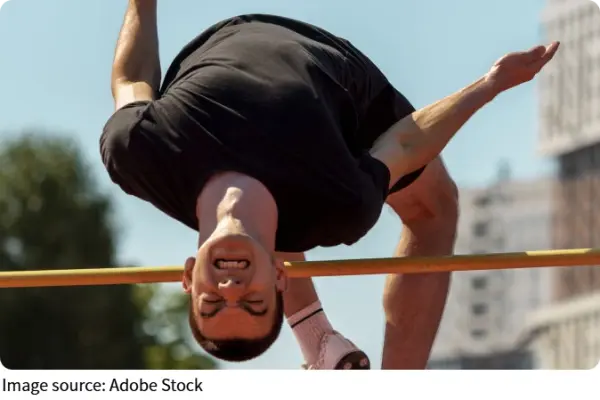
The aerial phase is the defining feature of the Fosbury Flop. After leaving the ground, the athlete turns so that the back faces the crosspiece. The head and shoulders move backward as the body rises, followed by the hips and legs.
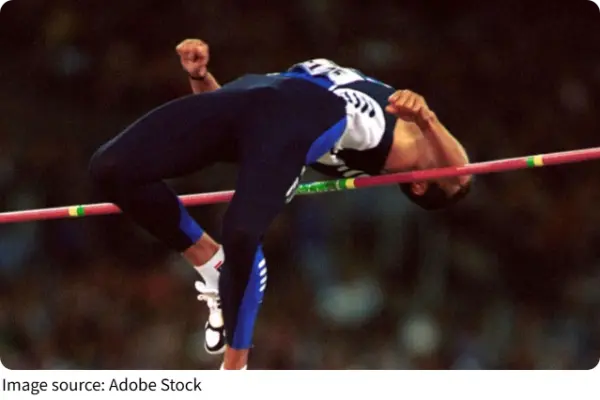
As the jumper approaches the crosspiece, the body forms an arch. The shoulders and head pass over first, while the hips rise to clear it. Once the hips have passed, the athlete lifts the legs and moves the feet upward to avoid touching it.
This movement requires flexibility, body awareness, and careful timing. Keeping the body relaxed makes it easier to adjust its position in the air. However, athletes must maintain control throughout the movement. Practicing individual positions before attempting a complete jump can make the learning process easier.
Completing the Jump and Landing Safely
Passing over the high-jump obstacle requires coordination between the upper and lower body. As the athlete moves through the air, the shoulders and upper back pass over first, followed by the hips. The jumper then raises both legs to complete the movement without touching the obstacle.
Landing is equally important. In the Fosbury Flop, athletes land on their upper back and shoulders on a specially designed high-jump landing mat. The mat must be properly positioned and suitable for this activity.
Beginners should never attempt this technique on a hard surface or an ordinary exercise mat. They should become familiar with the landing area and follow a qualified coach's instructions. Practicing controlled landings helps athletes build confidence and develop safer jumping habits.
Effective Ways to Practice
Regular practice helps athletes develop coordination and confidence. Several exercises can support improvement:
- Standing jumps: Practice upward jumps to develop basic takeoff coordination.
- Approach drills: Repeat the running pattern to establish consistent rhythm and foot placement.
- Takeoff practice: Focus on the final steps, free-leg movement, and arm action.
- Height-clearance drills: Use appropriate training equipment and low settings under supervision to learn the correct body position.
- Complete jumps: Combine the approach, takeoff, aerial movement, and landing when individual stages become familiar.
Athletes should increase the jumping height gradually instead of attempting their maximum too soon. Reviewing practice sessions can also help identify movements that need improvement.
Final Thoughts
The Fosbury Flop requires patience, repetition, and good technique. Every stage, from the curved approach to the final landing, contributes to a successful jump. Beginners should focus on running rhythm, one-foot takeoff, controlled body movement, and safe landings before attempting greater heights. With structured practice and proper guidance, athletes can steadily improve their coordination, confidence, and overall performance.
An Introduction to the Fosbury Flop High Jump Technique
Video by Brockman Athletics