Wingsuit Flight Control

Antonio
| 28-11-2026
 · Sport Team
Wingsuit flying allows people to glide through the air using a specially designed suit. Unlike simply falling downward, a flyer can adjust direction, change speed, and influence the flight path through carefully coordinated movements.
But how is this possible without a traditional steering system? The answer lies in body positioning, arm and leg movements, and the way air interacts with the suit.
How Wingsuit Directional Control Works
A wingsuit has fabric surfaces extending between the arms and legs. As a flyer moves through the air, these surfaces interact with the airflow to create lift and drag. Lift helps support forward movement, while drag is the resistance created as the suit travels through the air.
By changing body posture, flyers can influence how air moves around the suit. This allows them to adjust their direction and flight path rather than following one fixed line.
Directional control depends on small, coordinated adjustments. Even a slight change in body position can influence how the suit responds. Flyers must therefore understand how their movements affect speed, direction, and stability.
Using Body Position to Change Direction
Body positioning is one of the main ways to control a wingsuit flight. Leaning the upper body forward or backward can influence flying speed. Moving forward generally increases speed, while leaning backward can help reduce it.
Sideways movements are especially important for steering. By tilting the body to the left or right, a flyer can adjust the direction of movement and gradually change the flight path.
These adjustments require coordination rather than sudden movements. A controlled change in posture helps influence direction while maintaining a more consistent flying position.
Combining forward, backward, and sideways adjustments gives flyers several ways to influence their movement. They use different body positions according to the direction and speed they want to achieve.
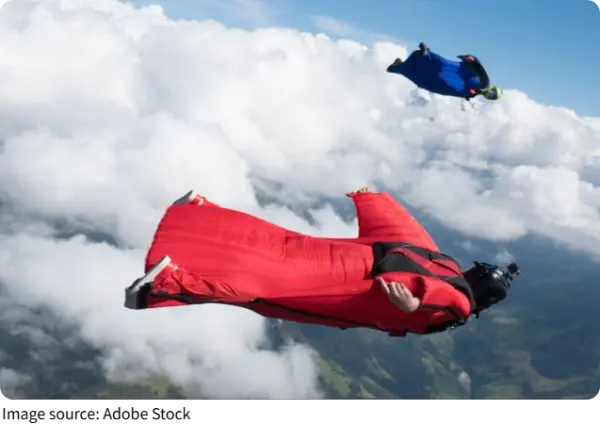
How Arm and Leg Movements Help
The arms and legs also play an important role in wingsuit control. Their positions affect the shape of the suit and the amount of surface exposed to the airflow.
Drawing the arms closer to the body can reduce the area facing the wind. This may reduce drag and allow the flyer to move faster. In contrast, increasing the arch of the body can expose more surface area to the airflow, creating greater resistance and helping reduce speed.
Leg movements also contribute to adjusting the overall flying posture. Together with arm movements, they allow flyers to make smaller adjustments that complement changes in body position.
These movements work as a coordinated system. A change in one area can influence the overall posture, so controlled movement is important when adjusting direction or speed.
The Role of Aerodynamics
Aerodynamics explains why a wingsuit can move through the air in a controlled way. When a flyer jumps, the suit's fabric surfaces interact with the surrounding air, producing lift and drag.
Lift helps support the flyer during forward movement, while drag affects the amount of resistance experienced. The balance between these forces changes according to body posture and the suit's position in the airflow.
When flyers adjust their posture, they also change how air interacts with the wingsuit. This can influence speed and flight direction.
Understanding these principles explains why wingsuit control requires more than simply moving the arms or leaning in one direction. The flyer must coordinate different movements while responding to the airflow.
Why Precise Movements Matter
Wingsuit control involves awareness and coordination. Flyers need to recognize how changes in posture influence their movement and make adjustments accordingly.
Large or unnecessary movements can make it harder to maintain a consistent flying position. For this reason, small adjustments are an important part of controlling direction and speed.
Learning how the suit responds to different positions also requires specialized knowledge and preparation. The movements may appear simple from a distance, but combining them effectively involves understanding several connected principles.
Final Thoughts
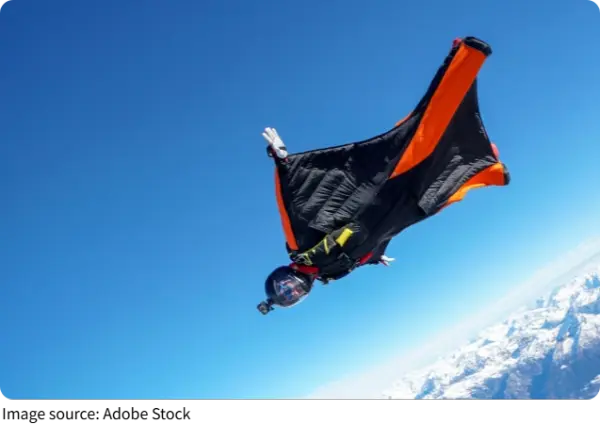
Wingsuit flyers can control their direction through body positioning, arm and leg movements, and aerodynamic principles. Tilting the body helps influence the flight path, while changing the position of the arms and legs allows further adjustments to speed and airflow.
The wingsuit does not steer independently. Its movement depends on how the flyer positions and controls it in the air. This combination of human movement and aerodynamics makes directional control possible and demonstrates the precision involved in wingsuit flying.
How to Fly a Wingsuit
Video by Project Cirrus