Market vs Supermarket

Mukesh Kumar
| 23-11-2026
 · Information Team
Choosing where to buy fresh food involves more than comparing the price displayed on a shelf. Freshness, seasonal availability, growing methods, and the distance food travels can all influence the value of a grocery purchase. Farmers’ markets and supermarkets offer different advantages, and neither is automatically the less expensive option.
The choice also involves how people shop and cook. Local markets offer direct conversations with growers, while supermarkets provide year-round variety. Comparing these differences can help shoppers decide which outlet suits their grocery needs.
Price Differences Depend on the Produce
The assumption that farmers’ markets are consistently more expensive than supermarkets does not reflect every shopping experience. Prices vary according to location, season, product type, growing methods, and the availability of particular fruits and vegetables.
A 2022 study published in Nutrients compared produce prices at 11 farmers’ markets and seven nearby supermarkets in California. Farmers’ market prices tended to be lower for organic or no-spray produce and higher for conventionally grown produce. However, most individual price differences were not statistically significant.
The study also calculated the cost of a weekly fruit and vegetable basket for a hypothetical family of three. A basket containing a mixture of conventional and organic produce cost US$61.49 at farmers’ markets, compared with US$57.81 at supermarkets. However, an entirely organic basket cost US$61.97 at farmers’ markets and US$78.31 at supermarkets.
These were estimated baskets, not receipts from actual household shopping trips. The study covered a small sample during a single summer, so its results should not be treated as a price guide for every market or season.
According to Adante Hart, a registered dietitian and nutrition educator, the price gap between farmers’ markets and grocery stores was narrowing when he discussed the comparison in 2022.
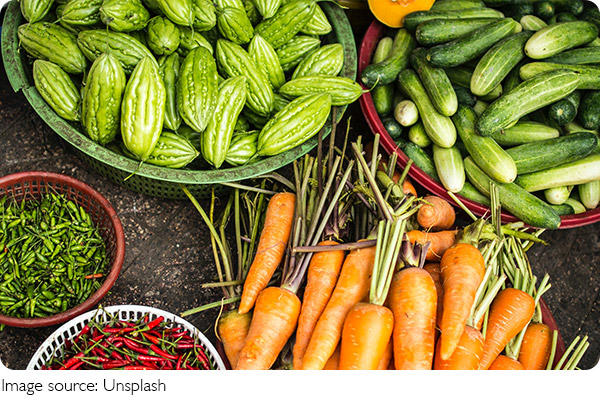
One advantage of farmers’ markets is the opportunity to purchase produce grown within the surrounding region. Food sold directly by growers may spend less time moving through distribution and storage systems, depending on harvesting and handling practices.
Seasonality also plays an important role. Fruits and vegetables harvested during their natural growing periods are often more readily available, which can influence their prices and quality. When supply is plentiful, certain products may become more affordable.
Supermarkets, meanwhile, offer a broader selection throughout the year because their supply networks can source produce from different regions. This convenience is particularly useful when seasonal products are unavailable locally.
Neither shopping channel guarantees superior freshness. Harvest timing, storage conditions, transportation, and handling all affect the quality of produce before it reaches the kitchen.
Choosing Foods for Everyday Meals
Access to fresh fruits and vegetables is an important part of maintaining a balanced diet. Farmers’ markets can make seasonal produce more visible and provide opportunities to try varieties that may not be purchased regularly.
Another advantage is direct interaction with growers. Shoppers can ask questions about harvesting, cultivation methods, storage, and preparation. Such conversations can make unfamiliar ingredients easier to incorporate into everyday meals.
Fresh produce from a supermarket can contribute to a nutritious diet just as produce from a farmers’ market can. What matters most is obtaining a varied selection of fruits and vegetables and including them regularly in meals, rather than simply choosing a particular shopping location.
Shopping Habits Can Improve Grocery Value
Getting good value from either shopping option requires some planning. Compare prices by weight, check seasonal availability, and purchase quantities that can be used before spoilage.
At farmers’ markets, comparing several vendors before making purchases can reveal differences in price and quality. Supermarkets can be useful for products that are unavailable locally, household staples, and items offered through promotions.
Before the next grocery trip, write down the produce needed for planned meals. Note comparable prices as you shop, then use those observations to decide whether visiting both outlets is worth the extra trip.