Dolphins

Caleb Ryan
| 21-04-2026
 · Animal Team
Introduction
Dolphins are often regarded as one of the most intelligent animals on Earth.
These playful and social creatures captivate us with their agility, communication skills, and complex behaviors. From their unique ability to use tools to their intricate social structures, dolphins are truly remarkable animals. Let's dive into the world of dolphins and explore the amazing facts that make them so extraordinary.
1. Dolphins Have a Complex Communication System
Dolphins are known for their ability to communicate with one another using a series of clicks, whistles, and body movements. Each dolphin has its own unique "signature whistle," much like a name, which it uses to identify itself to others in the pod. This sophisticated vocalization system is crucial for maintaining social bonds, coordinating hunting, and warning others of potential threats. Some dolphins even use "signature whistles" to call each other, demonstrating their ability to recognize individuals.
2. They Are Highly Intelligent and Can Solve Problems
Dolphins are considered highly intelligent, with cognitive abilities that rival some primates. Their brains are large in proportion to their body size, and studies have shown that they can solve complex problems, understand abstract concepts, and exhibit behaviors such as cooperation and self-awareness. Dolphins have also been observed using tools—such as marine sponges to protect their snouts while foraging on the ocean floor—further demonstrating their intelligence and problem-solving abilities.
3. Dolphins Are Social and Form Strong Bonds
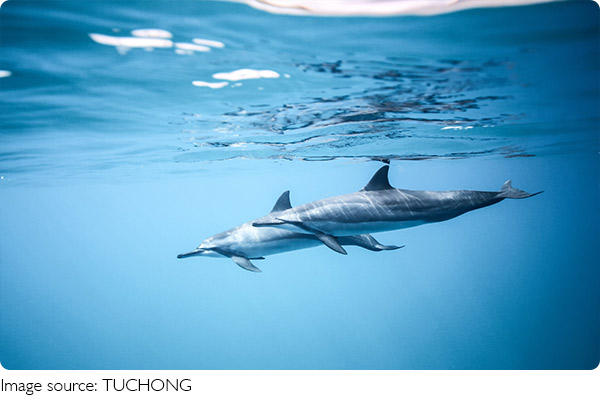
Dolphins are incredibly social animals that thrive in groups known as pods. These pods can range from a few individuals to several hundred members, and they work together to hunt, protect each other, and communicate. Dolphins have been known to engage in cooperative behaviors such as hunting in groups, where they use complex strategies to catch prey. They also form close-knit relationships with other dolphins, often displaying affection through physical touch, such as rubbing or swimming side by side.
4. Dolphins Can Recognize Themselves in a Mirror
One of the most intriguing aspects of dolphin intelligence is their ability to recognize themselves in a mirror. This ability, known as mirror self-recognition, is considered an indicator of self-awareness—a trait that was once believed to be unique to humans and some great apes. Dolphins have passed the "mirror test," in which they are shown their reflection in a mirror and then demonstrate behaviors that suggest they understand that the reflection is of themselves.
5. Dolphins Have Unique Sleep Patterns
Unlike humans, dolphins do not have a typical sleep cycle. Instead, they engage in unihemispheric slow-wave sleep, which means that only one hemisphere of their brain sleeps at a time while the other remains active. This allows them to remain alert and conscious while resting, which is vital for breathing and avoiding predators. They alternate which hemisphere of the brain is asleep, ensuring they get the rest they need while staying aware of their surroundings.
6. Dolphins Are Known for Their Playful Nature
Dolphins are perhaps best known for their playful behavior. They have been observed engaging in activities such as surfing on waves, playing with seaweed, and even interacting with boats and humans. Their playful nature is not only entertaining but also serves as a way for dolphins to build social bonds and practice essential skills, such as hunting and communication. Dolphins are often seen playing with objects in the water, displaying a level of curiosity and fun that is rare among animals.
Conclusion
Dolphins are truly remarkable creatures with a fascinating range of behaviors and abilities. From their advanced communication system to their problem-solving skills and social bonds, dolphins continue to captivate us with their intelligence and playful nature. Understanding more about these amazing animals not only deepens our appreciation for them but also highlights the importance of protecting their habitats and ensuring their continued existence in the wild.