The Glow of the Deep

Mason O'Donnell
| 20-03-2026
 · Animal Team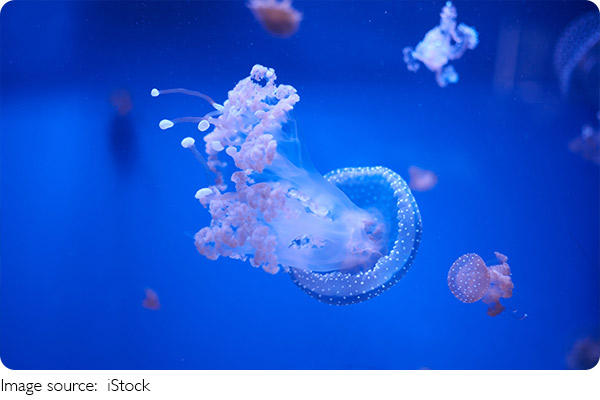
Picture yourself drifting thousands of feet below the ocean's surface. It's pitch dark, silent, and icy cold. Suddenly, a soft pulse of blue-green light flickers in the distance—like stars sparkling in an endless night sky.
These flashes aren't illusions; they come from living beings. Welcome to the world of bioluminescent creatures, where light is both language and survival tool.
The Science Behind the Glow
At the heart of this glowing spectacle is chemistry. Many deep-sea organisms produce light through a reaction between a molecule called luciferin and an enzyme named luciferase. When oxygen joins the reaction, light is released. What's fascinating is that this process is extremely efficient—almost no heat is generated, making it perfect for life in the deep where conserving energy is critical.
Not all animals carry the machinery to glow on their own. Some, like certain squid and fish, rely on symbiotic bacteria living inside special organs. These tiny partners shine steadily, helping their hosts blend into moonlight above or confuse predators below.
Survival Through Light
In a world without sunlight, glowing becomes more than decoration—it's strategy. Animals use bioluminescence in at least three remarkable ways:
1. Attracting prey: The anglerfish is a classic example. It dangles a glowing lure in front of its mouth. Small fish mistake it for food, swim closer, and end up becoming dinner.
2. Avoiding predators: Some squid release a burst of glowing fluid, like an underwater flare, to distract attackers while they escape. Others use counterillumination—matching the light from above to erase their shadow and vanish from view.
3. Communication: Flash patterns can serve as secret signals. Certain deep-sea shrimp and jellyfish send out rhythmic bursts to warn others of danger or to attract mates in the vast darkness.
Each flash, pulse, or steady glow is part of a language honed over millions of years.
The Beauty of Adaptation
Beyond survival, these light shows reveal how inventive nature can be. Consider the hatchetfish, whose body glimmers with silvery scales and rows of tiny light organs that mimic starlight. Or the firefly squid, whose synchronized displays in coastal waters look like glowing rivers. Even microscopic plankton join the show—when disturbed, they create glowing waves that sparkle against the night surf.
What's striking is how diverse the colors are. While blue-green is most common—because it travels farthest underwater—some creatures produce red or even violet light. This rare ability offers unique advantages. Since most animals can't see red light, glowing red becomes a kind of invisible flashlight, allowing predators to spot prey without being seen themselves. The dragonfish is a great example: with its red bioluminescence, it gains an edge in the eternal dark.
Why It Matters to Us
Studying deep-sea light isn't just about marveling at beauty. Scientists have adapted proteins from glowing jellyfish to track cancer cells, map brain activity, and even develop rapid diagnostic tools. Bioluminescence has become a powerful ally in medicine and biotechnology.
Exploring these glowing animals also broadens our understanding of ecosystems we rarely see. The deep sea covers more than half the planet, yet it remains largely unexplored. Every new discovery—whether a lanternfish with glowing organs or a comb jelly casting rainbows—teaches us more about life's adaptability and the importance of protecting fragile ocean habitats.
A Final Reflection
The next time you see fireflies flicker on a summer night or glow-in-the-dark toys in a store, think of the deep ocean. Down there, entire worlds exist in darkness lit only by life's ingenuity. The glow of the deep is more than a spectacle—it's a reminder that even in the harshest environments, nature finds ways to shine. These creatures show us that light isn't only a gift of the sun; it's a living tool, a survival strategy, and a symbol of resilience in places where we'd least expect it.