Fascinating Giraffe Facts
Pardeep Singh
| 11-02-2026
 · Animal Team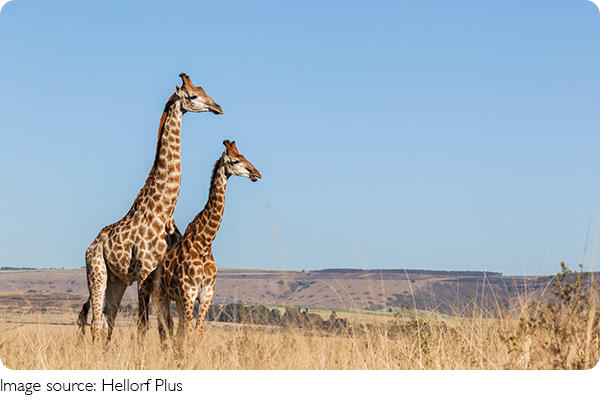
Giraffes are impossible to ignore.
Their towering height, long necks, and gentle eyes make them one of the most iconic animals on the planet. Watching them move gracefully across the savannah or nibble leaves from the tallest trees is mesmerizing.
Yet, beyond their striking appearance, giraffes harbor fascinating behaviors and adaptations that are worth discovering.
Unique Physical Traits
Giraffes are built for reaching heights few other animals can.
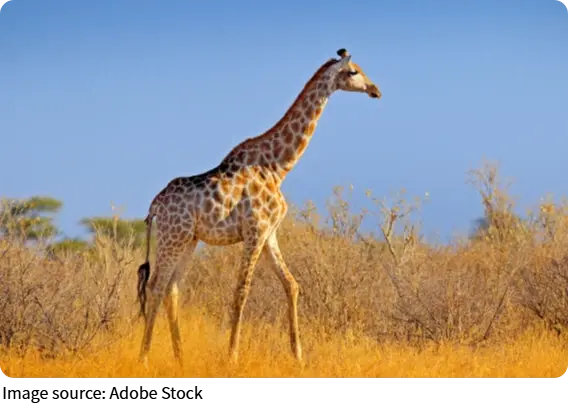
1. Neck structure: A giraffe's neck can reach up to six feet long, yet it contains only seven vertebrae—the same number as most mammals. This allows flexibility and height advantage for feeding.
2. Tongue and lips: Their prehensile tongues, measuring 18–20 inches, help them grasp leaves from thorny acacia trees without injury.
3. Legs and gait: Long legs allow a stride of up to 25 feet per step, letting them cover ground quickly. Their walking pattern, moving both legs on one side at a time, gives a smooth motion.
Actionable example: If visiting a safari park, notice how giraffes stretch their tongues around branches and use their long legs to cross open spaces effortlessly—a natural lesson in adaptation.
Feeding Habits
Giraffes have a unique approach to eating that sets them apart.
1. High browsing: They primarily eat leaves, buds, and shoots from tall trees, reaching places other herbivores cannot.
2. Selective eating: They carefully choose tender leaves, avoiding thorns and tougher foliage.
3. Efficient digestion: Giraffes chew food thoroughly and regurgitate it for a second digestion, much like cows.
Actionable example: When observing giraffes at a sanctuary, watch them pick specific branches and chew slowly—it demonstrates patience and precision in nature's design.
Social Structure
Giraffes live in flexible groups rather than tight-knit herds.
1. Loose herds: Members often change, creating dynamic social networks that adapt to food availability.
2. Male interactions: Males may engage in “necking,” where they swing their necks at each other in dominance contests without serious injury.
3. Calf care: While females nurse their young, multiple adults sometimes watch over calves for added protection.
Actionable example: Observe how a group of giraffes shifts around a feeding area—notice the subtle communication and positioning that keeps everyone safe while feeding.
Communication Styles
Although generally quiet, giraffes do have ways to communicate.
1. Visual signals: Neck movements, postures, and gestures convey dominance or alert others to danger.
2. Vocalizations: They make humming, snorting, or grunting sounds, often inaudible to humans at a distance.
3. Scent marking: Giraffes use scent from glands near their feet or heads to signal territory or reproductive status.
Actionable example: When watching giraffes, pay attention to how a subtle neck flick or ear position can indicate mood or intention—small gestures carry big messages.
Reproductive and Parenting Behavior
Giraffe parenting has its own unique patterns.
1. Mating rituals: Males use necking and scent to attract females. Dominant males usually mate with receptive females in their area.
2. Calving: Giraffes give birth standing up, which means calves fall about six feet at birth, helping stimulate breathing and strength.
3. Protection and teaching: Mothers keep calves close, teaching them to identify food and predators while gradually letting them explore under supervision.
Actionable example: At a wildlife reserve, observe how a mother giraffe positions herself around her calf during feeding, offering safety while encouraging independence.
Survival Adaptations
Giraffes' unique traits are all about survival.
1. Height advantage: Reaching high foliage gives them a reliable food source even when ground plants are scarce.
2. Vigilance: Their height allows them to spot predators from afar, giving early warning to themselves and nearby animals.
3. Water intake: They can go days without drinking, relying on moisture from leaves and minimizing vulnerability at waterholes.
Actionable example: Watch how giraffes bend awkwardly to drink—this careful movement prevents injury and demonstrates balance and control in their anatomy.
Giraffes are more than just tall animals—they're examples of evolution's clever solutions, from their long necks to their precise feeding strategies and social behaviors. Observing them closely reveals a world of subtle gestures, clever adaptations, and elegant survival skills that make every encounter unforgettable.