Giants of the Savanna

Santosh Jha
| 06-01-2026
 · Animal Team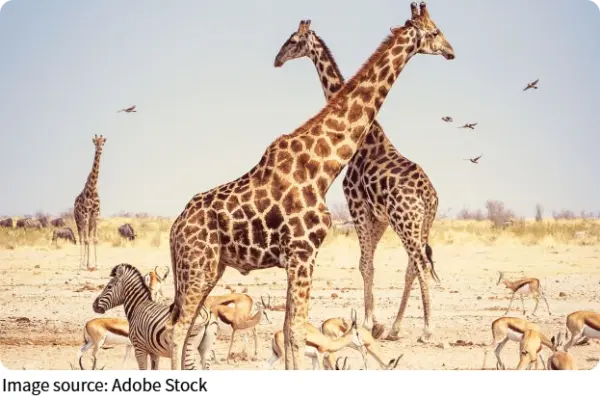
It's hard not to notice a giraffe. That elegant, towering silhouette grazing on a tall acacia tree instantly draws your gaze upward.
But there's more to these animals than their height. Every part of a giraffe—from its spotted coat to its knobby horns—has a purpose, helping it survive the savanna and navigate challenges that other animals could hardly imagine.
Watching them in action can make even a short moment feel extraordinary.
Built for the high life
Neck for advantage
A giraffe's neck can reach up to two meters, allowing it to eat leaves other herbivores can't. This vertical reach is a survival tool, giving them access to a reliable food source during dry seasons. Their long necks also help males during “necking” fights, where they swing their heads to display strength and compete for mates.
Legs that cover distance
With legs taller than many humans, giraffes can walk or run swiftly across the savanna. They can reach speeds of up to 60 kilometers per hour in short bursts, which helps them escape predators. Yet most of the time, their movements are calm and deliberate, conserving energy while they forage.
Actionable observation tip
If you're visiting a wildlife reserve, try comparing the height of giraffes to nearby trees or animals. Noticing these scale differences helps you appreciate just how uniquely adapted they are.
Spots that tell a story
Camouflage and identity
The patterns on a giraffe's coat aren't random. Each individual has a unique arrangement of spots, much like a human fingerprint. These markings help them blend into the dappled light of the savanna, providing camouflage from lions and hyenas.
Thermal regulation
The skin beneath their spots contains a complex network of blood vessels that helps regulate body temperature. In the heat of the day, giraffes can release excess heat through these patches, staying cooler than many other savanna animals.
Actionable learning idea
Try sketching a giraffe's pattern or making a grid of spots. It's a fun way to explore how diversity and design in nature serve real-life functions.
Social life and family ties
Loose social structure
Giraffes form loose herds rather than strict groups. Individuals may come and go, yet they recognize each other and form bonds, particularly mothers and calves. Young giraffes often follow their mothers for up to a year, learning safe paths, feeding spots, and predator awareness.
Communication without noise
They make low-frequency sounds that humans can't hear, helping them stay aware of other giraffes even when spread across vast areas. Body language, like neck posturing or head movements, also communicates dominance or alertness.
Actionable observation tip
Watch how a mother giraffe guides her calf across open land. Note the small pauses, glances, and adjustments. Even subtle movements reveal lessons about guidance and patience in nature.
Feeding strategies that maximize survival
Browsing at different levels
Giraffes feed mostly on acacia leaves, but they are flexible eaters. They can reach the highest leaves or bend their long necks to nibble low shrubs. This adaptability reduces competition with other herbivores and ensures they always have options.
Water conservation
Giraffes don't drink water frequently; they obtain moisture from leaves and can go for days without visiting a waterhole. When they do bend down, the wide stance of their front legs ensures stability on uneven ground—a careful balance between need and vulnerability.
Actionable learning activity
Next time you prepare a salad, think like a giraffe: layer leaves from high to low, imagining which parts would be accessible if you were reaching above others. It's a simple way to connect daily life with natural strategies.
Surviving predators and harsh landscapes
Height as a lookout
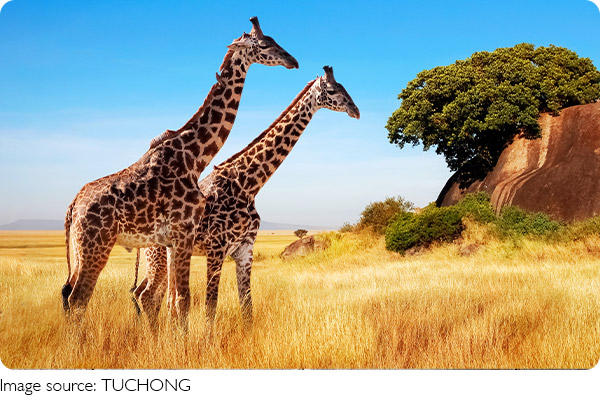
Standing tall gives giraffes a bird's-eye view. They can spot lions and hyenas from hundreds of meters away. When danger appears, a single powerful kick from a front or hind leg can deter most predators.
Energy-efficient movement
Despite their size, giraffes conserve energy through slow, measured walking. They only sprint when necessary, saving strength for long migrations or predator encounters.
Actionable reflection
Observing how giraffes balance safety, energy, and food teaches a subtle life lesson: sometimes success comes from patience, observation, and moving wisely rather than quickly.
Watching a giraffe stretch its neck toward the highest leaves or stride across the savanna reminds us that adaptation is a work of art. These gentle giants show how elegance, practicality, and resilience can coexist in one remarkable animal. And if we pay attention, we might carry a bit of their calm strength into our own daily lives.